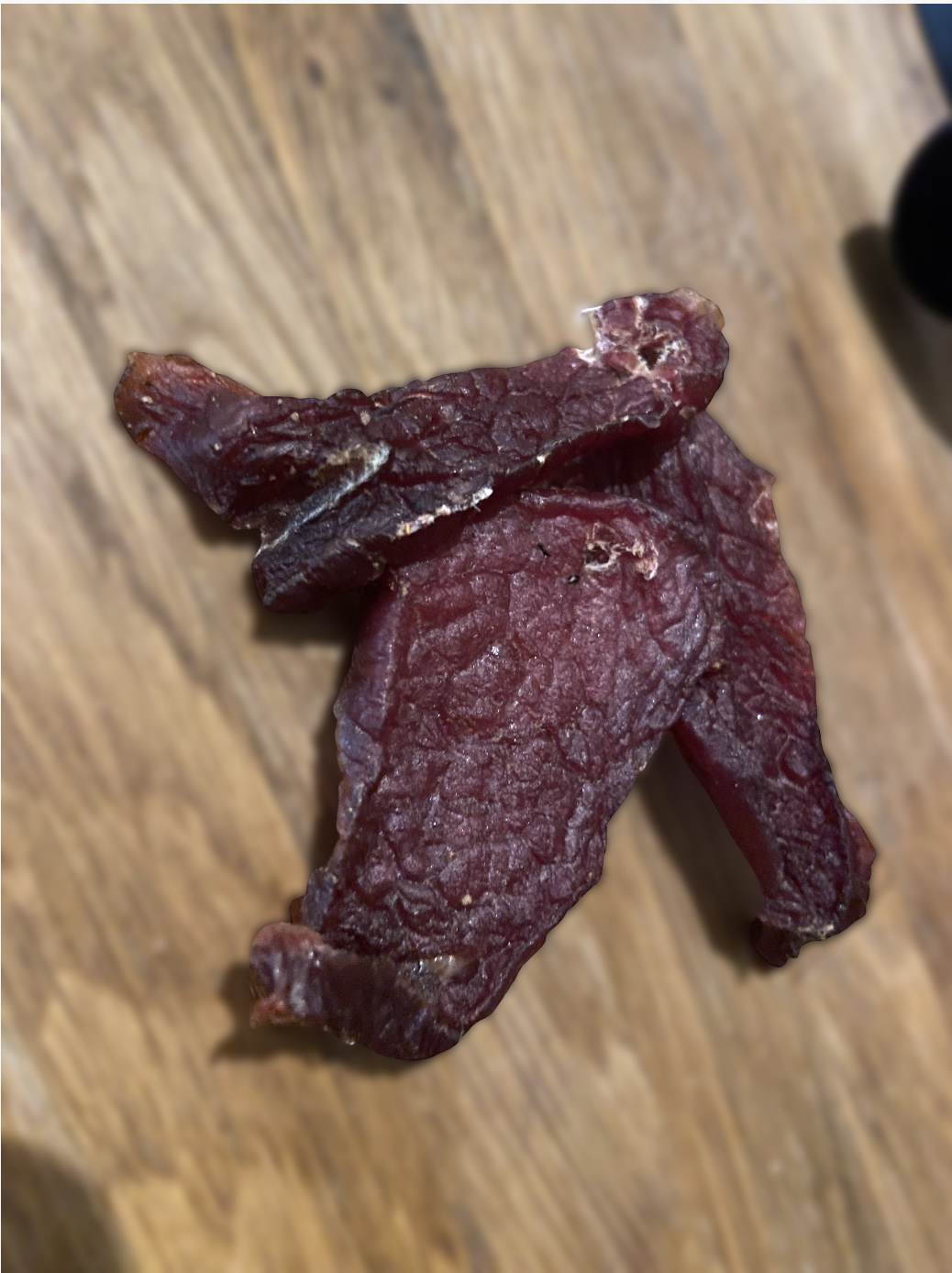
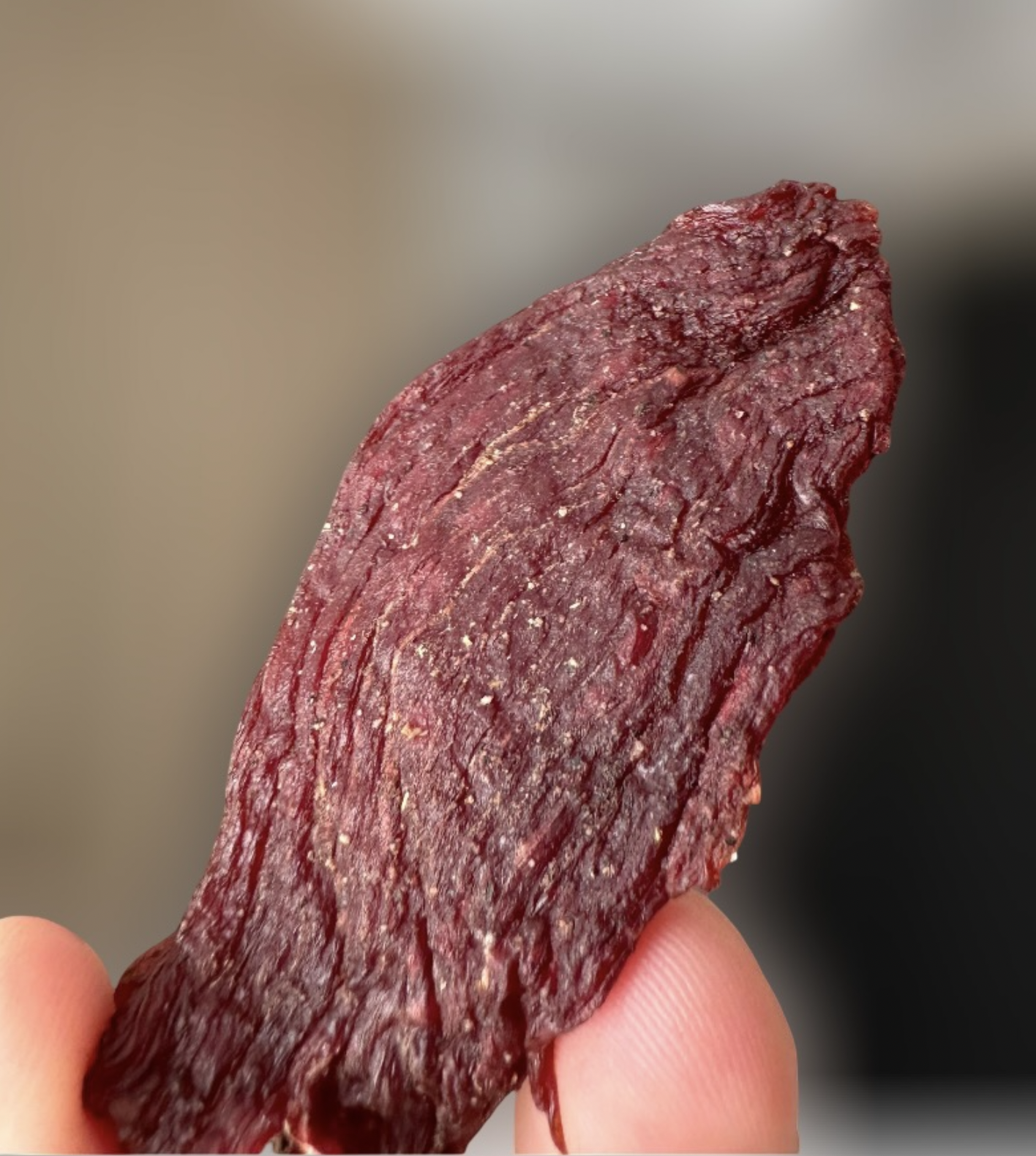
One of my worst fears as someone who makes beef jerky is having someone else get sick from a bad batch. That comes with some pretty nice side effects of affecting color...
Sodium Nitrite is an interesting ingredient in this regard. If you're making beef jerky at home, you've probably come across recipes calling for "pink curing salt," "Prague Powder #1," or "Instacure #1." Here are a few actionable properties it has - and doesn't have:
- It does kill botulism bacteria in your beef jerky batches.
- It affects texture - It can give it a bit of soft a rip-apart texture, softening the final product. At higher dosages it becomes more gel-like, not too dissimilar to Jack Links (but not to that extreme).
- It affects color tremendously - keeping meat pink/red instead of gray.
- It slows oxidation - helping prevent rancidity and extending shelf life.
- It does add a bit of a "cured" flavor - and it makes it, for better or worse, taste more "commercial". Whether it's a good or bad thing is up to you.
- It does NOT kill salmonella, or most other baddies.
Supposedly, it's not all that safe even in 'safe' amounts - but this bit I'll leave to researchers. Just know that the vast majority of commercial jerky does have it added. And if it doesn't, you may see celery listed as an ingredient, which is essentially the same thing - celery is a natural source of nitrates. That's a deep dive for another time.
Pink curing salt is not the same as Himalayan pink salt. Curing salt contains sodium nitrite, which is toxic in large amounts. Never substitute one for the other, and always measure precisely. Getting the amount right is crucial - too little won't provide adequate protection, and too much can be dangerous. Don't eyeball it.
So, how does sodium nitrite affect color of your beef jerky?
The amount of sodium nitrite (measured in parts per million, or PPM) directly affects the color, protection level, and safety of your jerky. Here's a breakdown:
| Prague Powder #1 | PPM (Nitrite) | Color Result | Other Effects |
|---|---|---|---|
| 0g per kg 0g per lb |
0 | ⬤ No effect | No botulism protection, but you're probably fine. |
| 0.5g per kg 0.25g per lb |
~30 | ⬤ Faint pink | Minimal curing effect. |
| 1g per kg 0.5g per lb |
~60 | ⬤ Starting to affect color, goes a bit reddish, maybe a bit spotty. | Some botulism protection. |
|
2.5g per kg 1.1g per lb |
~156 | ⬤ Stable pink/red | ✓ Sweet spot. Full botulism protection. Good shelf life. Stronger 'cured' flavor. |
|
3.2g per kg 1.5g per lb |
~200 | ⬤ Deep pink/red | ✓ Still safe. USDA max for most products. Stronger cured flavor. |
| 5g per kg 2.3g per lb |
~312 | ⬤ Very pink | ⚠️ Excessive. Metallic/chemical taste. More gel-like texture. Not recommended by USDA. |
|
6g+ per kg 2.7g+ per lb |
375+ | ⬤ Very pink | 🚫 DANGER ZONE. Do not eat it - you've added too much. Better off discarding the batch and taking it as a learning. |
🧮 Quick Calculator
🧮 Calculate Your Marinade
Take the guesswork out of your jerky marinades. Calculate the salinity & sweetness with MarinadeBuddy.
Go to MarinadeBuddy.com calculator page